Success Motivation & Community Empowerment

Thursday, 16 October 2008

Made for Success Quote

"The best ad is a good product." -- Alan H. Meyer


Chris' Commentary:

Why is it that some products succeed wildly while others languish and are even discontinued? This even when their companies spend the same amount on advertising? It is because one product is good and the other isn't and people who use them pass that information along. The same is true in our lives. We can tell people we are good at what we do until we are blue in the face but the true test for them is what kind of product (whether that is who we are, what we do, or what we make or sell) we produce. And it is what kind of product we produce that they will pass on. So if we want to succeed, it is better to produce a good product than merely tell people we can.

Action Point: Take some time today to give some thought to this question: Is the quality of my "product" the same as what I tell people it is? If it isn't, write down three steps you can take within one week to improve your product.

Start with the Basics


by Chris Widener

So the other day I was at the club getting ready to go work out, and I was standing in the row of lockers talking to another guy. I heard a couple of kids come in behind me, but didn't turn around. It is obvious from their conversation that they were about five and three years old and they were going to go swimming.

Suddenly the older boy says to the younger one in a scolding voice, "Joey, you have to take your shoes off before you take your pants off." I turned around and there is this three-year old sitting on the ground, trying to take his pants off over these huge waffle-stomper boots!

The guy I was talking to said, "That is good basic life instruction!"

I said, "I'm gonna use that for an article someday."

Indeed: Always take your shoes off before you take your pants off. It made me think about how we often try to get so sophisticated in our quest for success and personal growth but isn't it really true that all success begins with the basics? In fact, perhaps the struggles we have are because we have gotten away from the basics. With that in mind I gave some thought to the basics in a few areas. Here they are.

Business
- Always produce a good product
- Be honest
- Under-promise and over-deliver
- Help people and money will come
- Pay your people well

Family
- Put them first as they will be with you last
- Treat your spouse like they are the most important person in the world - they are!
- Give your kids more time than even you think that you should
- Be sure to discipline your kids - they need boundaries
- Take the time to create family memories
- Travel as far and spend as much money as you need to make it home for special occasions - in the long run you'll be glad you did

Relationships
- Treat people the way you want to be treated
- Don't speak ill of others
- Always help if you can when others are in need
- Find ways to make others feel special
- Always tell others what you like or appreciate about them

Health
- Significantly lower your intake of "junk"
- Exercise more, even if it is just a short daily walk
- Drop the bad habits, like alcohol and cigarettes
- Eat more fruits and vegetables

Finances
- Eliminate debt - be ruthless about this
- Take a look at where you are currently spending
- Tighten up on (or cut out) the loose stuff in your budget
- Save some money each month
-Give some money away to charity each month

Spirituality
- Pray regularly
- Trust God, even when it seems hard
- Live what you say you believe
- Get involved in a community of faith

Emotions
- Take an inventory of your emotional health
- Work to control extremes in any emotion (emotions are good when they help to feel what we are supposed to feel, but destructive when they get to extremes)
- Allow yourself to feel emotions you have suppressed

If this list seems a little overwhelming, pick a few items you feel will make the most difference and focus on those basics!

Made for Success Quote


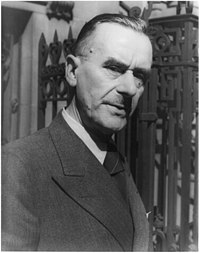
Paul Thomas Mann

"I have always been an admirer. I regard the gift of admiration as indispensable if one is to amount to something; I don't know where I would be without it." -- Thomas Mann

Chris' Commentary:

In many ways we become what we admire. We look at something and roll it around in our minds as something good and then try to emulate it and it draws us to become like it (or them). We can admire a character trait, a skill, or a person. Sometimes we have to purpose to admire. Sometimes those traits or people who are most worthy of admiration are not those we would think of at first. Rather, we tend to be drawn to celebrity or panache. If we truly want to achieve balanced success in this life, we would be well off to find people who are truly deserving of our admiration. Then, as we admire them, we can have our lives shaped by that which we long to become.

Action Point: Find someone today who you haven't necessarily admired in the past. Think about those things in his or her life that are admirable. Then decide to work on those things in your own life. And if you want to double your blessing, tell that person what you admire about them!

The Power in Praising People


by Chris Widener

One of the keys to success is to have successful relationships. We are not islands and we don't get to the top by ourselves. And one of the key ways to grow successful in our relationships is to be "life-giving" people to others. Every person we meet, we either give life to or take life from. You know what I mean. There are people who encourage you and when you are done being with them you feel built up. Then there are others who you feel torn down by. Successful people are people who have mastered the art of building others up.

One of the ways we build people up is to praise them. There is power in praising people! Something begins to happen in them, in you, and in your relationship when you praise someone. Remember a time when someone told you something about yourself in a praising manner? It was great, wasn't it? You probably liked that person more after they praised you, didn't you?

Now I am not talking about praising people for the sake of praising people. I am talking about honestly looking for and praising positive character traits and action of others around you. Don't lie to people. If they have done something wrong, correct it, but when they do something right, Praise it!

With that said, here are benefits of and ways to start praising people.

Benefits

Your relationship grows. Life is about relationships. Family relationships, friends, and co-workers. When we begin to praise people for their positive aspects, our relationships grow. It puts them, and us, on the fast track. Your leadership and influence grows. Who is going to have greater leadership and influence capacity in the lives of their followers, the one who tears down or the one who builds up?

Stronger relationships and loyalty. When the person is appreciated and praised, they become fiercely loyal, because they know that you care for them, love them, and appreciate them. This will take you to success.

Happier, more fulfilled people. I truly believe it is our job to build others up and that they need it. It is a good thing, in and of itself to invest in the lives of others by praising and encouraging them. Even if we never get anything in return, it is the right thing to do to build up other people. Someone else will always come along to tear them down; the successful person will instill in them the power of praise!

Some ways to praise

Character traits. Is there someone you know who is joyful? Hard-working? Honest? Then let them know how much you appreciate that in them. You can do it with a word or a card, or a phone call. Say something like this, "You know Tom, I think it is great that you are such a hard-worker. It seems like you are always the first one here and the last one to leave. You really set a good example and I want you to know how much I appreciate that." Simple!

Action

Same idea as above. "Sue, I don't know if anybody else has told you this, but your work on the Johnson account was excellent. You have a wonderful ability to communicate the vision of the project and that helps all of the rest of us out in our roles and tasks. Thanks for that. It is greatly appreciated."

Other ways you can show praise and appreciation is with a card, a gift, or time off from work.

Make it your goal to praise at least five people a day. If you can, praise ten people a day. Or perhaps you can try to praise everyone you come in contact with. It will take work but it is possible. It just takes discipline and a little work.

Any way you cut it though, there is power in praising people. First for them, then for you! -- Chris Widener

Seeds of Greatness


by Denis Waitley

Love: The Greatest Four-letter Word

L - is for Listen. To love someone is to listen unconditionally to his or her values and needs without prejudice.

O - is for Overlook. To love someone is to overlook the flaws and faults in favor of looking for the good.

V - is for Voice. To love someone is to voice your approval on a regular basis. There is no substitute for honest encouragement, positive strokes and praise.

E - is for Effort. To love someone is to make a constant effort to spend the time, to make the sacrifice, to show your interest.

As Tall as You Want to Be


by Dr. Denis Waitley

When he was two years old, this adopted child of two college professors suddenly and inexplicably stopped growing, and his health started to fail. A team of doctors gave him six months to live after they diagnosed him as suffering from a rare disease that inhibits digestion and nutrients in food. Intravenous feedings of vitamins and supplements allowed him to regain his strength, but his growth was permanently stunted.

Confined to hospitals for long periods of time, until the age of nine, he quietly plotted his revenge on the kids who taunted him and called him "peanut."

He recalled many years later that subconsciously "the whole experience made me want to succeed at something athletic." Sometimes his sister, Susan, went ice skating at the local rink, and he would go along to watch. There he stood, a frail, undergrown kid, with a feeding tube inserted through his nose and down into his stomach. When he wasn't using it, one end of the tube was taped behind his ear.

One day, as he watched his sister whirl around the ice, he turned to his parents and said, "You know, I think I'd like to try ice skating." Talk about two adults, looking at their life-threatened child, with glances that were beyond belief!

Well, he tried it and he loved it, and he went at it with a passion. Here was something fun at which he could excel, where height and weight weren't important.

During his medical checkup the following year, the doctors were startled to discover that he had actually started growing again. It was too late for him to reach normal size, but neither he nor his family cared. He was recovering and succeeding. He believed in his dream, although he had little else to hang on to.

None of the kids taunt him and tease him today. Instead, they all cheer and rush to get his autograph. He has completed numerous dazzling performances on the world professional ice skating tour, including long strings of triple jumps, complicated maneuvers, and athletic moves, capped off with a racing front flip that brings him to a sudden stop inches from the audience. Although he has retired from professional skating, he remains a coach, mentor and commentator revered by everyone in winter sports.

At five feet three inches and 115 pounds of pure muscle and electrifying energy, former Olympic gold medal figure skating champion, Scott Hamilton stands as tall and as proud as any winner. Scott's size didn't limit his faith and reach. Don't let doubts and critics limit yours. This doesn't mean that you'll close almost every sale or get promoted in record time. Scott Hamilton certainly didn't hit every triple-axle jump he ever attempted, especially during the initial learning phase. Success in developing any skill requires a basic trust in your ability that should never be allowed to waver.

You can stand tall, no matter how small! -- Denis Waitley

Be Generous This Week and Beyond!

I've always viewed money as transportation or a library card. It should be employed rather than hoarded. A great deal of money is not necessarily a blessing; the lack of it is not necessarily a curse. Certainly, it is easier to have a wholesome abundance than not. It is better for humankind to have enough for daily needs, plus a little for comfort, culture, hospitality and for charity.

Extreme poverty and extreme wealth often have equally negative effects on human nature and society. The destitute have no money for their needs, much less creature comforts. They can't give to others. The very rich are sometimes no better off. Some purposefully neglect the comforts of home and family. Think of the recluse multi-millionaire, Howard Hughes – he denied himself even food and proper medical care. There are wealthy individuals who never give a dime to charity and who are disdainful of others less fortunate than themselves. They hide behind a shallow veil of conceit.

Wealth is truly a source of happiness when it is used to improve society and the planet. What you are doing with what you have is much more important than having the Midas touch. To quote the indomitable Dolly Levi, the wise matchmaker in the musical Hello, Dolly: "Money is like manure. It doesn't do anybody any good until you spread it around!" -- Denis Waitley

Seeds of Greatness


by Denis Waitley

Seeds of Optimism: The Biology of Hope
(These quotes were taken from Denis Waitley's Excerpts from The Seeds of Greatness Treasury booklet)

Life is a self-fulfilling prophecy. You may not get what you want, but in the long run you will get what you expect.

A good life is a collection of happy memories.

The good old days are here and now!

Happiness is the experience of living a life you feel is worthwhile.

To be enthused is to be infused with life!

Accept yourself as you are right now; an imperfect, changing, growing and worthy person.

You are a masterpiece of creation.

Each human being on earth has equal rights to fulfill his or her own potential.

You are an uncut gemstone of priceless value. Cut and polish your potential with knowledge, skills and service and you will be in great demand throughout your life.

View stumbling blocks as stepping stones to the stars.

Optimism creates energy and is contagious.

The Formula for Failure and Success


by Jim Rohn

Failure is not a single, cataclysmic event. We do not fail overnight. Failure is the inevitable result of an accumulation of poor thinking and poor choices. To put it more simply, failure is nothing more than a few errors in judgment repeated every day.

Now why would someone make an error in judgment and then be so foolish as to repeat it every day? The answer is because he or she does not think that it matters.

On their own, our daily acts do not seem that important. A minor oversight, a poor decision, or a wasted hour generally doesn't result in an instant and measurable impact. More often than not, we escape from any immediate consequences of our deeds.

If we have not bothered to read a single book in the past ninety days, this lack of discipline does not seem to have any immediate impact on our lives. And since nothing drastic happened to us after the first ninety days, we repeat this error in judgment for another ninety days, and on and on it goes. Why? Because it doesn't seem to matter. And herein lies the great danger. Far worse than not reading the books is not even realizing that it matters!

Those who eat too many of the wrong foods are contributing to a future health problem, but the joy of the moment overshadows the consequence of the future. It does not seem to matter. Those who smoke too much or drink too much go on making these poor choices year after year after year... because it doesn't seem to matter. But the pain and regret of these errors in judgment have only been delayed for a future time. Consequences are seldom instant; instead, they accumulate until the inevitable day of reckoning finally arrives and the price must be paid for our poor choices - choices that didn't seem to matter.

Failure's most dangerous attribute is its subtlety. In the short term those little errors don't seem to make any difference. We do not seem to be failing. In fact, sometimes these accumulated errors in judgment occur throughout a period of great joy and prosperity in our lives. Since nothing terrible happens to us, since there are no instant consequences to capture our attention, we simply drift from one day to the next, repeating the errors, thinking the wrong thoughts, listening to the wrong voices and making the wrong choices. The sky did not fall in on us yesterday; therefore the act was probably harmless. Since it seemed to have no measurable consequence, it is probably safe to repeat.

But we must become better educated than that!

If at the end of the day when we made our first error in judgment the sky had fallen in on us, we undoubtedly would have taken immediate steps to ensure that the act would never be repeated again. Like the child who places his hand on a hot burner despite his parents' warnings, we would have had an instantaneous experience accompanying our error in judgment.

Unfortunately, failure does not shout out its warnings as our parents once did. This is why it is imperative to refine our philosophy in order to be able to make better choices. With a powerful, personal philosophy guiding our every step, we become more aware of our errors in judgment and more aware that each error really does matter.

Now here is the great news. Just like the formula for failure, the formula for success is easy to follow: It's a few simple disciplines practiced every day.

Now here is an interesting question worth pondering: How can we change the errors in the formula for failure into the disciplines required in the formula for success? The answer is by making the future an important part of our current philosophy.

Both success and failure involve future consequences, namely the inevitable rewards or unavoidable regrets resulting from past activities. If this is true, why don't more people take time to ponder the future? The answer is simple: They are so caught up in the current moment that it doesn't seem to matter. The problems and the rewards of today are so absorbing to some human beings that they never pause long enough to think about tomorrow.

But what if we did develop a new discipline to take just a few minutes every day to look a little further down the road? We would then be able to foresee the impending consequences of our current conduct. Armed with that valuable information, we would be able to take the necessary action to change our errors into new success-oriented disciplines. In other words, by disciplining
ourselves to see the future in advance, we would be able to change our thinking, amend our errors and develop new habits to replace the old.

One of the exciting things about the formula for success - a few simple disciplines practiced every day - is that the results are almost immediate. As we voluntarily change daily errors into daily disciplines, we experience positive results in a very short period of time. When we change our diet, our health improves noticeably in just a few weeks. When we start exercising, we feel a new vitality almost immediately. When we begin reading, we experience a growing awareness and a new level of self-confidence. Whatever new discipline we begin to practice daily will produce exciting results that will drive us to become even better at developing new disciplines.

The real magic of new disciplines is that they will cause us to amend our thinking. If we were to start today to read the books, keep a journal, attend the classes, listen more and observe more, then today would be the first day of a new life leading to a better future. If we were to start today to try harder, and in every way make a conscious and consistent effort to change subtle and deadly errors into constructive and rewarding disciplines, we would never again settle for a life of existence – not once we have tasted the fruits of a life of substance!

To Your Success,
Jim Rohn

Seeds of Greatness


by Denis Waitley

Being Self-Reliant

To be self-reliant adults, we need to set some guidelines:
  • Be different, if it means higher personal and professional standards.
  • Be different, if it means being more gracious and considerate to others.
  • Be different, if it means being cleaner, neater and better groomed than the group.
  • Be different, if it means putting more time and effort into all you do.
  • And be different, if it means taking the calculated risk.
The greatest risk in life is to wait for and depend upon others for your own security.

The greatest security is to plan and act, and take the risk that will ultimately ensure your personal freedom and independence.

From Motivation to Motive-Action


by Denis Waitley

With the current times, each of us needs to understand the magnitude of social and economic change in the world. In the past, change in business and social life was incremental and a set of personal strategies for achieving excellence was not required. Today, in the knowledge-based world, where change is the rule, a set of personal strategies is essential for success, even survival. Never again will you be able to go to your place of business on autopilot, comfortable and secure that the organization, state or government will provide for and look after you. You must look in the mirror when you ask who is responsible for your success or failure. You must become a lifelong learner and leader, for to be a follower is to fall hopelessly behind the pace of progress. The power brokers in the new global arena will be the knowledge facilitators. Ignorance will be even more the tyrant and enslaver than in the past. As you look in the mirror to see the 21st Century you, there will also be another image standing beside you. It is your competition. Your competition, from now on, will be a hungry immigrant with a wireless, hand-held, digital assistant. Hungry for food, hungry for a home, for a new car, for security, for a college education. Hungry for knowledge. Smart, quick thinking, skilled and willing to do anything necessary to be competitive in the world marketplace. Working long hours and Saturdays, staying open later, serving customers better and more cheerfully. To be a player in the 21st Century you have to be willing to give more in service than you receive in payment.

These are the new rules in the game of life. These are the actions you must take to be a leader and a winner in your personal and professional life. By mastering these profoundly simple action steps, you will be positioned to be a change master in the new century.

Action Step Number One - Consider Yourself Self-Employed, But Be a Team Player. What this means is that you are your own Chief Executive Officer of your future. Start thinking of yourself as a service company with a single employee. You're a small company that puts your services to work for a larger company. Tomorrow you may sell those services to a different organization, but that doesn't mean you're any less loyal to your current employer. Taking responsibility for yourself in this way does mean that you never equate your personal long-term interests with your employer's.

The first idea is resolving not to suffer the fate of those who lost their jobs and found their skills were obsolete. The second is to begin immediately the process of protecting yourself against that possibility – by becoming proactive instead of reactive.

Ask yourself these questions:

How vulnerable am I? What trends must I watch? What information must I gain? What knowledge do I lack?

Again, think of yourself as a company. Set up a training department in your mind and make certain your top employee is updating his or her skills. Make sure you have your own private pension plan, knowing that you are responsible for your own financial security.

Entrusting the government or an employer, other than yourself, with your retirement income is like hiring a compulsive gambler as your accountant.

You're the CEO of your daily life who must have the vision to set your goals and allocate your resources. The mindset of being responsible for your own future used to be crucial only to the self-employed, but it has become essential for us all. Today's typical employees are no longer one-career people. Most will have five separate careers in their lifetimes. Remember, your competition is a hungry immigrant with a laptop. Action Step Number One is to consider yourself to be self-employed, but be a team player.

Action Step Number Two - Be Flexible in the Face of Daily Surprises. We live in a time-starved, overstressed, violent society. Much of our over-reaction to what happens to us every day is a result of our self-indulgent value system, where we blame others for our problems, look to organizations or the government for our solutions, thirst for immediate sensual gratification and believe we should have privileges without responsibilities. This condition is manifested in the high crime rate and in the increase in violence in the work place where employees blame their managers for threatening their security.

I have learned how to be flexible in the face of daily surprises, which is one of the most important action traits for a leader. I really haven't been angry for about 17 years. During that time, no one has tried to physically harm me or someone close to me. I've learned to adapt to stress in life and reserve my fear or anger for imminently physically dangerous situations. I rarely, if ever, get upset with what people say, do or don't do, even if it inconveniences me. I do react emotionally when I see someone physically or emotionally abusing or victimizing another. But I've learned not to sweat the small stuff.

The Serenity Prayer, "Grant me the Serenity to accept the things I cannot change, the Courage to change the things I can, and the Wisdom to know the difference.’, is a valuable measuring tool we can apply to our lives. Simple yet profound words to live by. -- Denis Waitley

About The Author:
Denis Waitley has studied, counseled and trained leaders in virtually every field including Apollo astronauts, Olympic gold medalists, Super Bowl champions, returning POW's, heads of state and Fortune 500 top executives.
Denis is recognized as a world class speaker and author and has traveled the globe sharing success ideas and strategies to thousands of companies the past 25 years. To book Dr. Waitley to speak for your company or to be part of your upcoming Regional or National Convention send an email to speaker@deniswaitley.com or call 877-929-0439 and ask for Hilary.

Vitamins for the Mind


by Jim Rohn

"Formal education will make you a living; self-education will make you a fortune." ---Jim Rohn

PERSONAL RESPONSIBILITY

Don't become a victim of yourself. Forget about the thief waiting in the alley; what about the thief in your mind?

It is not what happens that determines the major part of your future. What happens, happens to us all. It is what you do about what happens that counts.

You say, "The country is messed up." That's like cursing the soil and the seed and the sunshine and the rain, which is all you've got. Don't curse all you've got. When you get your own planet, you can rearrange this whole deal. This one you've got to take like it comes.

Walk away from the 97% crowd. Don't use their excuses. Take charge of your own life.

Take advice, but not orders. Only give yourself orders. Abraham Lincoln once said, "Since I will be no one's slave, I will be no one's master."

You must take personal responsibility. You cannot change the circumstances, the seasons, or the wind, but you can change yourself. That is something you have charge of. You don't have charge of the constellations, but you do have charge of whether you read, develop new skills, and take new classes.

Your paycheck is not your employer's responsibility; it's your responsibility. Your employer has no control over your value, but you do.

Doing the Remarkable


by Jim Rohn

When it comes to meeting and conquering the negativity in your life, here is a key question: what can you do, starting today, that will make a difference? What can you do during economic chaos? What can you do when everything has gone wrong? What can you do when you've run out of money, when you don't feel well and it's all gone sour? What can you do?

Let me give you the broad answer first. You can do the most remarkable things, no matter what happens. People can do incredible things, unbelievable things, despite the most impossible or disastrous circumstances.

Here is why humans can do remarkable things: because they are remarkable. Humans are different than any other creation. When a dog starts with weeds, he winds up with weeds. And the reason is because he's a dog. But that's not true with human beings. Humans can turn weeds into gardens.

Humans can turn nothing into something, pennies into fortune, and disaster into success. And the reason they can do such remarkable things is because they are remarkable. Try reaching down inside of yourself; you'll come up with some more of those remarkable human gifts. They're there, waiting to be discovered and employed.

With those gifts, you can change anything for yourself that you wish to change. And I challenge you to do that because you can change. If you don't like how something is going for you, change it. If something isn't enough, change it. If something doesn't suit you; change it. If something doesn't please you, change it. You don't ever have to be the same after today. If you don't like your present address, change it — you're not a tree!

If there is one thing to get excited about, it's your ability to make yourself do the necessary things, to get a desired result, to turn the negative into success. That's true excitement.

To Your Success,
Jim Rohn

The Ant Philosophy


by Jim Rohn

"We must learn to apply all that we know so that we can attract all that we want." ---Jim Rohn

Over the years I taught children about a simple but powerful concept - the ant philosophy. I think everybody should study ants. They have an amazing four-part philosophy, and here is the first part: ants never quit. That's a good philosophy. If they're headed somewhere and you try to stop them; they'll look for another way. They'll climb over, they'll climb under, and they'll climb around. They keep looking for another way. What a neat philosophy, to never quit looking for a way to get where you're supposed to go.

Second, ants think winter all summer. That's an important perspective. You can't be so naive as to think summer will last forever. So ants are gathering in their winter food in the middle of summer.

An ancient story says, "Don't build your house on the sand in the summer." Why do we need that advice? Because it is important to be realistic. In the summer, you've got to think storm. You've got to think rocks as you enjoy the sand and sun. Think ahead.

The third part of the ant philosophy is that ants think summer all winter. That is so important. During the winter, ants remind themselves, "This won't last long; we'll soon be out of here." And the first warm day, the ants are out. If it turns cold again, they'll dive back down, but then they come out the first warm day. They can't wait to get out.

And here's the last part of the ant philosophy. How much will an ant gather during the summer to prepare for the winter? All he possibly can. What an incredible philosophy, the "all-you-possibly-can" philosophy.

Wow, what a great seminar to attend - the ant seminar. Never give up, look ahead, stay positive and do all you can.

To Your Success,
Jim Rohn

Four Steps to Success!


by Jim Rohn

Let me pass on to you these four simple steps to success:

Number one is good ideas. Be a collector of good ideas. My mentor taught me to keep a journal when I was twenty five years old. I've been doing it now all these years. They will be passed on to my children and my grandchildren. If you hear a good health idea, capture it, write it down. Don't trust your memory. Then on a cold wintry evening, go back through your journal, the ideas that changed your life, the ideas that saved your marriage, the ideas that bailed you out of bankruptcy, the ideas that helped you become successful, the ideas that made you millions. What a good review. Going back over the collection of ideas that you gathered over the years. So be a collector of good ideas for your business, for your relationships, for your future.

The next step to success is to have good plans. A good plan for the day, a good plan for the future, a good health plan, a good plan for your marriage. Building anything is like building a house, you need to have a plan. Now here is a good time management question: When should you start the day? Answer: As soon as you have it finished. It is like building a house, building a life. What if you just started laying bricks and somebody asks, "What are you building?" And you say, "I have no idea." See they would come and take you away to a safe place. So, don't start the house until you finish it. Now, is it possible to finish the house before you start it? Yes, but it would be foolish to start before you had it finished. Not a bad time management idea. Don't start the day until it is pretty well finished -- at least the outline of the day. Leave some room to improvise. Leave some room for extra strategies, but finish it before you start it.

And here is the next piece that is a little more challenging: Do not start the week until you have it finished. Lay it out, structure it, then put it to work. Then the next one is a little tougher yet; do not start the month until you have it finished.

And finally the big one, don't start the year until it is finished on paper. It's not a bad idea, toward the end of the year, to sit down with your family for the family structure plans, sit down in your business for the business plans, sit down with your financial advisor for your investments and map out the year... properties to buy, properties to sell, places to go with your family, lay out the year. I finally learned to do that. It was also helpful for my family to show them where they appeared on my calendar. You know I used to have my business things on there and I used to have my lectures and my seminars all laid out on my calendar, and guess what the children said, "Where are we on the game plan, please show us our names on the game plan." So you need to do it for your children, for your spouse, for your friends.

Now, here is the third step to success, and it can be really challenging. Learning to handle the passing of time. It takes time to build a career, it takes time to make changes, so give your project time, give your people time. If you're working with people, give them time to learn, grow, change, develop, produce. And here is the big one, give yourself time. It takes time to master something new. It takes time to make altered changes and refinement in philosophy as well as activity. Give yourself time to learn, time to get it, time to start some momentum, time to finally achieve. It is easy to be impatient with yourself. I remember when I first tried to learn to tie my shoes. The shoe strings, it seemed like it would take me forever. Finally I got it and it didn't take forever, but it seemed like for a while I'd never learn, I'd get it backwards; the bow goes up and down instead of across. How do I straighten that out? Finally I got it, it just took time.

Mama taught me a little bit about playing the piano. "Here is the left hand scale", she'd say. I got that, it was easy. Then she said, "Here is the right hand scale." I got that, that was easy. Now she said, "We are going to play both hands at the same time." I said, "Well, how can you do that?" Now one at a time was easy... but at the same time? Looking at this hand and looking at that hand, finally I got it. Finally I got where I could play the scales with both hands. Then I remember the day she said, "Now we are going to read the music and play with both hands." I thought, "You can't do all that." But you know, sure enough I'm looking at the music, looking at each hand, a little confused at first, but finally I mastered it. It took a little time to read the music and play with both hands. Then I remember the day she said, "Now we are going to watch the audience, read the music and play with both hands. I thought, "Now that is going too far!" How could you possibly do that? But see adding them one at a time and giving myself time to master one before we went to the next one; sure enough I got to where I could watch the audience, read the music and play with both hands. So the lesson here is: Give yourself time, you can become a better pro, you can better master the art of parenting, you can better master the art of managing time, conserving resources, working together as a partner. Give yourself time.

And here's the last one; learning to solve problems. Business problems, family problems, financial problems, emotional problems, etc. -- challenges for us all. Here's the best way to treat a problem: As an opportunity to grow. Change if you have to, modify if you must, discard an old philosophy that wasn't working well for a new one. The best phrase my mentor ever gave me was when he said, "Mr. Rohn if you will change, everything will change for you." Wow, I took that to heart, and sure enough the more I changed the more everything changed for me.

So learn to master good ideas, have good plans, handle the passing of time and solve problems, and you will be on your way to more success than you could ever imagine!

To Your Success,
Jim Rohn